
Large infrastructure projects require a reliable and continuous supply of concrete. Highways, bridges, airports, ports, dams, and industrial facilities may consume thousands or even hundreds of thousands of cubic meters throughout construction. Choosing and configuring the right concrete batching plant is therefore essential for maintaining production efficiency, concrete quality, and project schedules.
For contractors in Latin America, plant configuration should be based on project volume, peak demand, site conditions, aggregate characteristics, transportation distances, and construction duration. A properly selected concrete batching plant(planta dosificadora de concreto) can reduce material waste, minimize delivery delays, and provide consistent concrete for demanding structural applications.
Determine the Required Production Capacity
Production capacity is the first factor to consider. Large infrastructure projects usually have higher and more consistent concrete demand than residential or small commercial projects. However, selecting the largest available plant is not always the most economical solution.
Calculate Peak Hourly Demand
Contractors should estimate total concrete volume and divide it according to the planned construction schedule. Peak hourly consumption should also be considered because concrete placement may concentrate around bridge decks, foundations, tunnel structures, or large pavement sections.
| Project Type | Typical Configuration Consideration | Key Priority |
|---|---|---|
| Highway construction | Medium to high-capacity plant | Continuous production |
| Bridge projects | High-capacity batching system | Mix consistency |
| Dam and hydropower projects | High-output concrete plant | Long-term reliability |
| Port and industrial projects | Medium or high-capacity plant | Flexible mix production |
A plant should normally have enough reserve capacity to handle fluctuations without operating continuously at its maximum rated output.
Select the Appropriate Plant Type
The choice between stationary and mobile equipment depends heavily on project duration and site conditions. Stationary plants are suitable when construction will remain concentrated in one location for several years. Mobile plants can be advantageous when production points change during construction.
Stationary Plants for Long-Term Projects
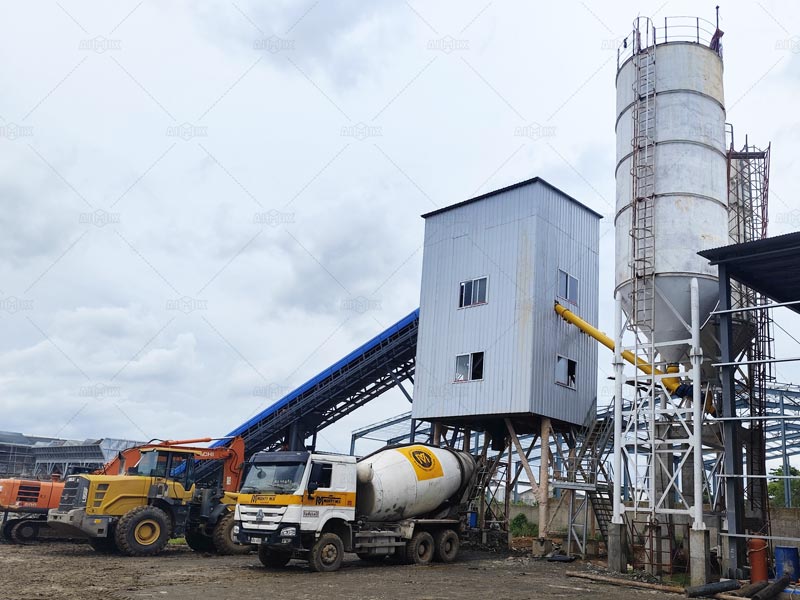
A stationary concrete batching plant is generally appropriate for large projects with stable production requirements. It can be equipped with larger aggregate storage systems, cement silos, conveyors, and automated control systems to support high-volume production.
Mobile Plants for Changing Construction Sites
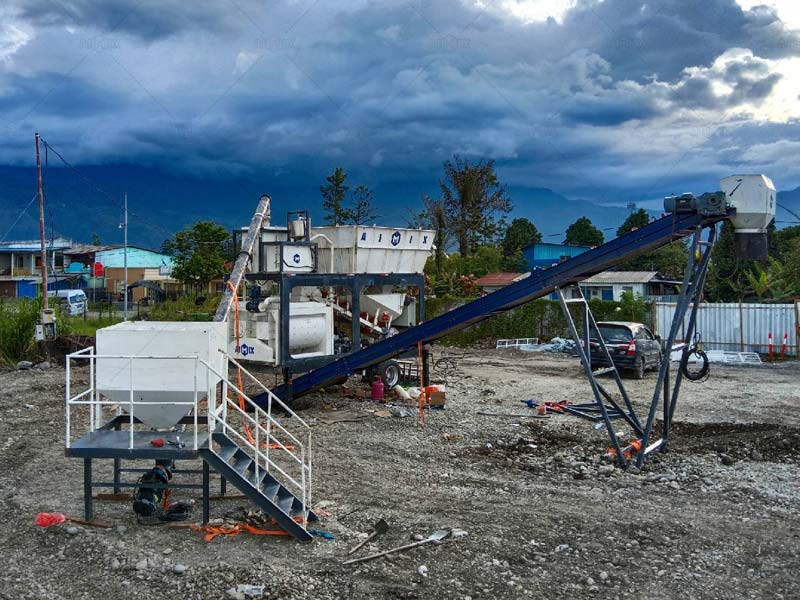
For highways, mining infrastructure, and geographically distributed projects, a mobile configuration can reduce concrete transportation distances. Relocating production closer to different work areas can improve delivery efficiency and reduce truck operating costs.
Configure Aggregate and Cement Storage
Storage capacity has a direct impact on production continuity. If aggregate or cement supplies are insufficient, the plant may have to stop even when the mixer and batching system are operating correctly.
Provide Sufficient Aggregate Bins
The aggregate system should accommodate the number and type of materials required by the project’s mix designs. Multiple aggregate compartments allow different sizes and sources to be stored separately, improving batching accuracy.
Cement silos should also provide sufficient reserve capacity based on daily consumption and local supply conditions. In remote areas, additional storage can help protect production from transportation interruptions.
Prioritize Automation and Accurate Batching
Large infrastructure projects often require different concrete grades for foundations, columns, pavements, bridges, and other structures. Manual operation can make it difficult to maintain consistent proportions across large production volumes.
Use an Automated Control System
An automated control system can coordinate aggregate weighing, cement dosing, water measurement, admixture addition, and mixing cycles. Accurate batching reduces material waste while improving the consistency of the finished concrete.
Automation is also valuable when evaluating the concrete plant price(planta de hormigón precio). A system with a higher initial investment may provide better long-term value if it reduces labor requirements, material waste, and production errors.
Consider Regional Conditions in Latin America
Infrastructure projects across Latin America can have very different operating environments. High-altitude construction, tropical climates, remote mining areas, and urban projects may require different equipment configurations.
Adapt the Plant to Local Project Conditions
For concrete plants in Chile(Para plantas de hormigón en Chile), contractors may need to consider mountainous terrain, long transportation routes, and projects located in remote mining regions. Equipment layout and aggregate supply systems should be designed around local logistics.
For a concrete plant in Bolivia, altitude, road accessibility, and remote project locations can influence equipment selection and transportation planning. Components should be selected with appropriate operating conditions and maintenance accessibility in mind.
Evaluate the Total Concrete Plant Price
The initial concrete plant price should not be the only purchasing criterion. Large infrastructure projects can operate for several years, making operating and maintenance costs particularly important.
Calculate Total Cost of Ownership
Contractors should compare equipment costs together with installation, transportation, electricity, fuel, labor, spare parts, maintenance, and relocation expenses. A plant with a higher purchase price may offer a lower cost per cubic meter when it provides higher productivity and greater reliability.
When comparing concrete plants in Chile or selecting a concrete plant in Bolivia(selección de una planta de concreto en Bolivia), buyers should also consider local technical support and spare-parts availability. Faster maintenance response can prevent expensive production downtime.
Build a Configuration Around Project Continuity
The best concrete batching plant configuration is not simply the one with the highest output. It should provide the right balance of capacity, storage, automation, mobility, reliability, and maintenance support for the specific project.
Before making a final decision, contractors should define expected concrete volume, peak demand, construction duration, aggregate types, site conditions, transportation distances, and future project requirements. Comparing these factors with the total concrete plant price provides a more accurate basis for investment. With a properly configured system, large infrastructure projects in Latin America can achieve stable concrete supply, lower operating costs, and more predictable construction schedules.