
In container terminals, intermodal rail yards, and heavy industrial manufacturing facilities, the straddle carrier serves as a specialized off-rail material handling vehicle capable of self-loading, transporting, and stacking heavy loads. For procurement managers and engineering teams, evaluating the financial commitment required for straddle carrier acquisition involves more than reviewing the initial factory quote. A comprehensive understanding of the total expenditure requires breaking down the price structure into its core engineering and operational components.
The Total Procurement Cost of a straddle carrier comprises the base equipment cost, optional features and technical upgrades, and additional landing expenses incurred during delivery and commissioning. This article provides an objective analysis of the primary cost drivers associated with straddle carrier procurement from an engineering and logistics perspective.
1. Base Equipment Cost
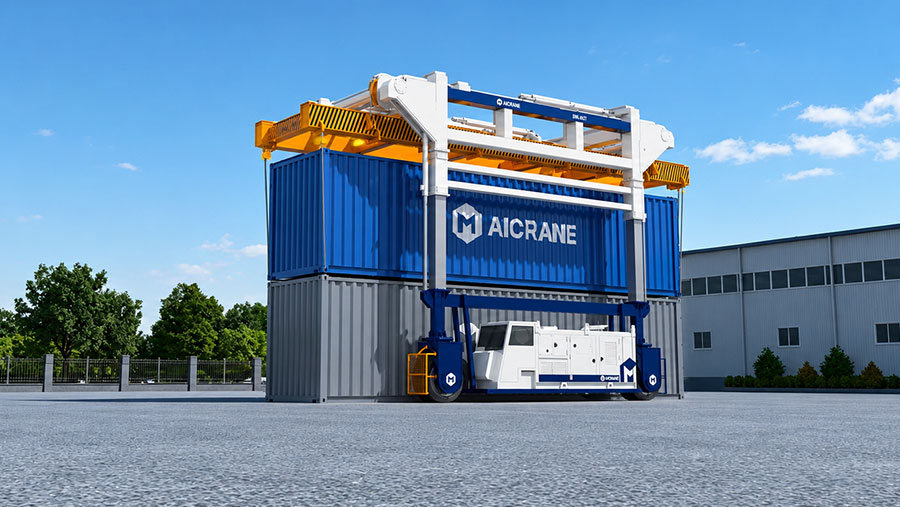
The base equipment cost refers to the standard specification machine designed to meet baseline operational requirements. This straddle carrier price component is primarily determined by physical dimensions, load capacity, structural requirements, and core powertrain architecture.
1.1 Payload Capacity and Stacking Tier Heights
The physical size and structural framework of a straddle carrier directly dictate steel consumption, hydraulic or electrical system sizing, and braking system specifications:
- Stacking Capacity: Straddle carriers are categorized by their stacking height capability, commonly configured as 1-over-1 (stacking containers 2-high), 1-over-2 (3-high), or 1-over-3 (4-high). Increasing the stacking capacity by one tier raises the vehicle’s center of gravity and overall height. This necessitates larger structural steel profiles, enhanced overturning stability designs, and more complex safety interlocks, which increases the base equipment price.
- Rated Load Capacity: Standard ISO container straddle carriers typically feature rated lifting capacities between 35 and 60 metric tons. While operating similarly to rubber tired gantry (RTG) cranes in container yard management, straddle carriers offer higher horizontal mobility. Custom straddle carriers engineered for industrial loads (such as precast concrete elements, steel coils, or wind turbine components) may require capacities exceeding 100 metric tons. Higher load ratings require heavy-duty main girders, high-capacity wheel sets, and reinforced hoist drums, raising manufacturing costs.
1.2 Powertrain and Drivetrain Architecture
The choice of propulsion and drive technology is a major determinant of initial capital expenditure:
- Diesel-Hydraulic (DH): A diesel engine drives hydraulic pumps, which power hydraulic motors for travel and hoisting operations. This traditional architecture features established technology and a relatively low initial purchasing cost.
- Diesel-Electric (DE): A diesel engine drives an electrical generator, which supplies variable-frequency drives (VFD) and electric motors for wheel travel and hoisting. Electrical power transmission offers higher energy efficiency than hydraulic lines, but the inclusion of generators, inverters, and specialized motor controllers results in a higher baseline cost than diesel-hydraulic models.
- Hybrid Powertrains: Hybrid systems pair a smaller diesel generator with energy storage devices, such as ultracapacitors or lithium-ion battery banks, to capture braking and lowering energy. While reducing fuel consumption, the addition of battery management systems (BMS) and energy storage cells increases initial manufacturing costs.
- Battery-Electric (e-Carrier / All-Electric): All-electric carriers eliminate the internal combustion engine entirely, relying on high-capacity industrial battery packs. Due to the cost of high-density battery chemistry, high-power charging interfaces, and thermal management systems, battery-electric models carry the highest baseline equipment price among current drive configurations.
1.3 Steering, Suspension, and Axle Configurations
Straddle carriers utilize multi-axle wheel arrangements (typically 4, 8, or 16 wheels) to distribute heavy wheel loads across pavement surfaces. The complexity of the steering system (such as all-wheel steering, electronic steer-by-wire, or crab steering) and the suspension system (independent hydraulic suspension versus mechanical leaf springs) directly impacts chassis manufacturing expenses.
2. Optional Equipment and Technical Upgrades
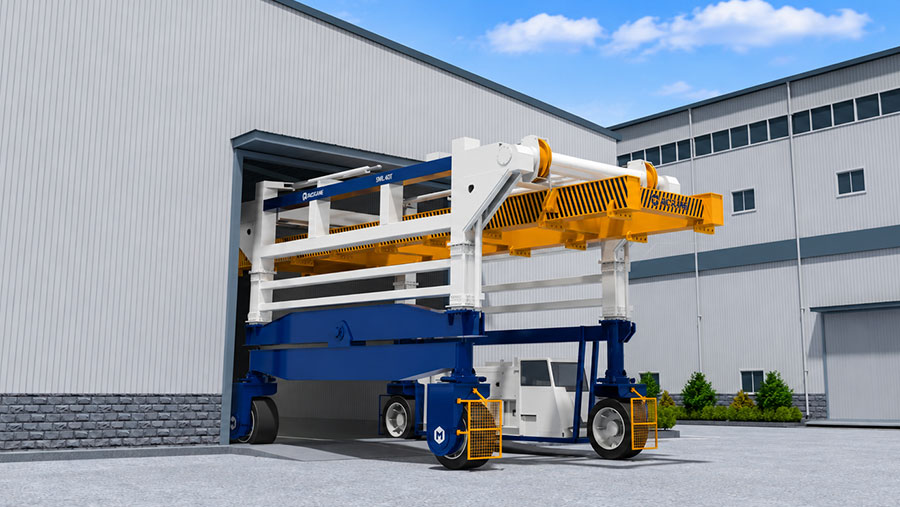
Depending on specific yard layouts, cargo types, and automation targets, purchasing organizations select optional packages that add functionality to the baseline vehicle. These options constitute a noticeable portion of the final equipment invoice.
2.1 Specialized Spreaders and Lifting Attachments
The spreader or lifting beam is the primary interface between the straddle carrier and the load:
- Standard Single-Lift Spreader: Designed for handling individual 20-foot or 40-foot ISO containers, serving as the default baseline attachment.
- Twin-Lift Spreader: Capable of picking up two 20-foot containers simultaneously, requiring more complex twistlock mechanisms, telescoping drives, and control logic, which adds to the optional equipment cost.
- Custom Industrial Attachments: Non-containerized material handling requires specialized tools, such as hydraulic coil clamps, multi-point synchronized lifting beams, or slab tongs. These non-standard, custom-engineered attachments incur engineering design fees and lower-volume production costs.
2.2 Automation and Driver-Assist Systems
Technological integration is a major driver of cost variability in modern straddle carriers:
- Anti-Sway Systems: Electronic anti-sway control utilizes feedback sensors, encoders, and algorithmic motion control to dampen load oscillation during acceleration and braking. This feature is typically offered as a software and sensor upgrade package.
- Precision Positioning (RTK-GPS & Laser Sensors): Absolute positioning systems provide centimeter-level accuracy within the yard, integrating RTK-GPS receivers, optical distance sensors, and onboard processing units.
- Automation-Ready Packages: For facilities planning a transition to automated straddle carriers (A-STR), vehicles can be pre-configured with drive-by-wire controls (steering, braking, and hoisting), LiDAR obstacle detection arrays, and communication hardware compatible with Terminal Operating Systems (TOS). These automation interfaces increase electrical and software option costs.
2.3 Operator Cabin, Ergonomics, and Safety Enhancements
For manually operated machines, upgrades to operator working conditions and physical safety add to the equipment total. Options include elevated panoramic cabins, specialized vibration-dampening mounts, impact-resistant glass, 360-degree camera monitoring systems, automatic fire suppression systems, and high-capacity HVAC units designed for extreme ambient temperatures.
3. Additional Expenses and Total Landing Costs
The ex-works (EXW) or free-on-board (FOB) price quoted by a gantry crane manufacturer does not represent the full investment required to put a straddle carrier into service. Budget planning must account for several additional landing expenses:
3.1 Logistics, Dismantling, and Protective Packaging
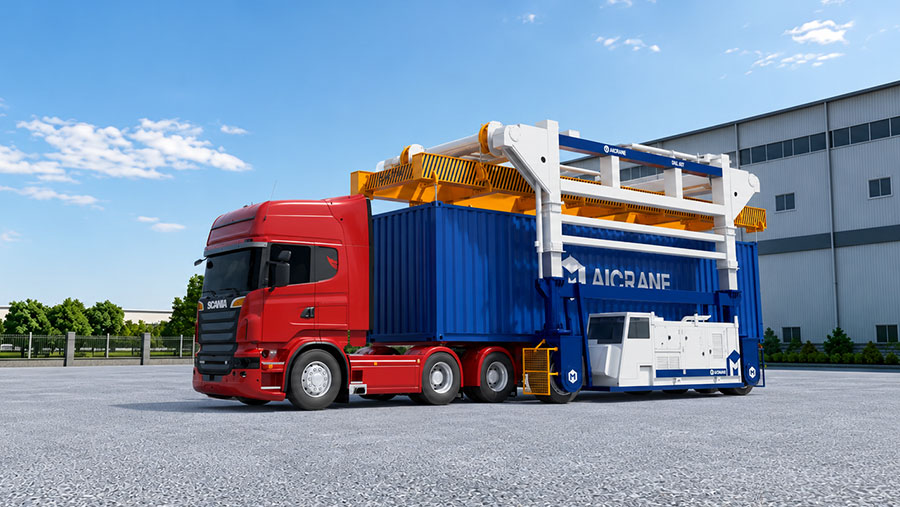
Due to their large physical dimensions, fully assembled straddle carriers cannot be shipped inside standard ocean containers:
- Dismantling and Packaging: Prior to departure, the vehicle frame is disassembled into major modular components—such as main girders, side legs, power packs, cabins, and spreaders—and treated with anti-corrosion protective coatings for sea transit.
- Ocean and Inland Freight: Transporting over-dimensional components requires specialized flat-rack containers or breakbulk ocean shipping. Onland transport from the destination port to the site often necessitates heavy-haul trucking permits and escort vehicles for out-of-gauge (OOG) cargo.
3.2 On-Site Assembly, Commissioning, and Testing
Once the component modules arrive at the facility, specialized field personnel must reassemble and commission the machine:
- Heavy Equipment Rental: On-site assembly typically requires renting mobile crane capacity (such as 100-ton to 200-ton mobile cranes) to hoist main girders and leg structures into place.
- Manufacturer Technical Services: OEM engineers must be deployed to superintend mechanical assembly, complete electrical terminations, load operational control parameters, and integrate software interfaces. Per-diem service rates, travel, and accommodation expenses contribute to landing costs.
- Certification and Load Testing: Local statutory regulations for lifting equipment require static and dynamic load testing prior to operational sign-off. This involves sourcing test weights and paying third-party inspection agency fees.
3.3 Import Tariffs, Customs Duties, and Regulatory Modifications
International procurement involves cross-border financial considerations, including local customs tariffs, import taxes, and administrative processing fees. Additionally, meeting regional regulatory standards may require localized modifications, such as updating diesel engine emissions compliance (e.g., EU Stage V or US EPA Tier 4 Final), certifying pressure vessels, or fitting specific electrical enclosure ratings.
3.4 Site Infrastructure Adaptations
Integrating straddle carriers into an existing facility may require supporting civil works:
- Pavement and Subgrade Reinforcement: To withstand concentrated wheel loads during turning maneuvers, yard travel lanes may require concrete paving or subgrade soil stabilization.
- Charging and Refueling Infrastructure: Deploying battery-electric straddle carriers requires investments in high-voltage grid connections, fast-charging stations, or automated battery-swapping equipment. Conversely, diesel or hybrid fleets require compliant fuel storage and DEF (Diesel Exhaust Fluid) dispensing infrastructure.
4. Life Cycle Cost (LCC) and Strategic Procurement Analysis
Evaluating straddle carrier pricing solely on initial capital expenditure (CAPEX) can lead to incomplete financial projections. A complete economic evaluation uses a Life Cycle Cost (LCC) approach, balancing capital costs against ongoing operational expenditures (OPEX):
| Cost Component / System Type | Capital Expenditure (CAPEX) Impact | Operational Expenditure (OPEX) Impact |
|---|---|---|
| Diesel-Hydraulic Drive | Lower initial cost | Higher maintenance frequency; higher fuel consumption |
| Diesel-Electric / Hybrid Drive | Moderate to higher initial cost | Improved fuel efficiency; reduced brake pad wear |
| Battery-Electric Drive (including batteries) | Highest initial cost | Lower energy costs per operating hour; simplified mechanical maintenance |
| Automation Option Packages | Significantly higher initial cost | Lower labor costs; reduced equipment collision damage risks |
5. Conclusion
The total price of an Aicrane straddle carrier is a composite figure determined by structural design, payload capacity, powertrain choices, and technology integration. While structural dimensions and drive systems establish the base price, optional configurations—such as specialized spreaders, electronic anti-sway features, and automation interfaces—add specific functional value. Furthermore, landing costs, including international freight, field assembly, regulatory compliance, and site infrastructure, must be calculated to establish the true total cost of ownership.
By systematically evaluating each cost element alongside projected throughput, site conditions, and energy infrastructure, purchasing organizations can execute capital allocation decisions based on comprehensive operational and financial metrics.