
Proper site and plant layout planning helps a concrete batching plant operate safely, maintain a steady material supply, and reduce unnecessary vehicle movement. Before purchasing equipment, contractors and investors should evaluate land conditions, production targets, transportation access, and local regulations. The layout should match the selected plant type and the intended business model, whether supplying an individual construction project or selling ready-mix concrete commercially.
1. Choose a Suitable Site for Your Concrete Batching Plant
Start by assessing the distance to construction sites, aggregate suppliers, cement suppliers, and major delivery routes. A location close to customers can reduce transportation time, which is particularly important for ready-mix concrete because delivery must account for the concrete’s setting characteristics.
Check land availability, ground-bearing capacity, drainage, access roads, power supply, and water availability. Also verify zoning permissions, environmental requirements, dust control measures, noise restrictions, and wastewater management rules before committing to the site.
2. Plan the Layout According to Plant Type
Different concrete batching plants require different installation arrangements. Consider these common configurations when developing the initial site plan.
- Stationary concrete batching plant: Allocate sufficient space for foundations where required, aggregate storage, cement silos, mixing equipment, and maintenance access. This configuration suits long-term production at a fixed location.
- Foundation-free concrete batching plant: Follow the manufacturer’s installation requirements for the specific model. Although conventional foundation work may be reduced or avoided, ground stability, leveling, and any required anchoring must still be verified.
- Mobile concrete batching plant: Plan transportation access, equipment positioning, setup space, and potential relocation routes. Confirm transport dimensions and site access before delivery.
- Ready mix concrete batching plant: Include space for aggregate stockpiles, cement storage, truck loading, vehicle circulation, and dispatch operations. The layout should support the planned delivery volume and fleet size.
3. Arrange Equipment and Material Flow Efficiently
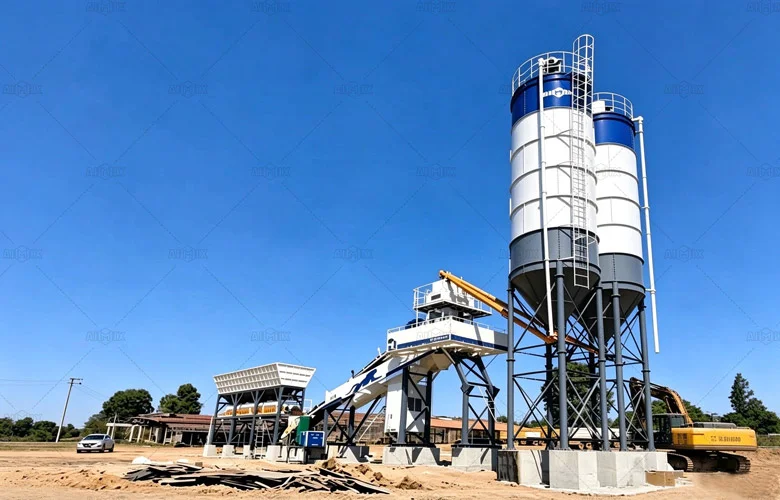
A practical layout should minimize unnecessary movement between aggregate storage, weighing systems, the mixer, and the discharge point. Keep aggregate stockpiles accessible to loaders and separate material types to reduce contamination.
Position cement silos and conveying equipment according to the plant’s technical design. Provide safe access for maintenance, cement delivery, and dust collection. Plan truck entry and exit routes to limit reversing, traffic conflicts, and interference with loading operations.
Allow adequate space for electrical systems, control rooms, water supply, drainage, spare parts, and routine maintenance. Final dimensions and clearances should follow equipment drawings, local codes, and site-specific engineering assessments.
4. Match Plant Capacity to Project Requirements
Estimate peak hourly concrete demand, daily consumption, delivery schedules, and expected operating hours before choosing plant capacity. Consider the number of trucks, mixer cycle time, aggregate supply, and interruptions caused by weather or material deliveries.
Oversizing the plant can increase capital and operating costs, while insufficient capacity may delay construction or limit sales. Select equipment based on realistic demand forecasts and confirm expected output with the supplier under your operating conditions.
5. Prepare the Site Before Starting Concrete Plant Business
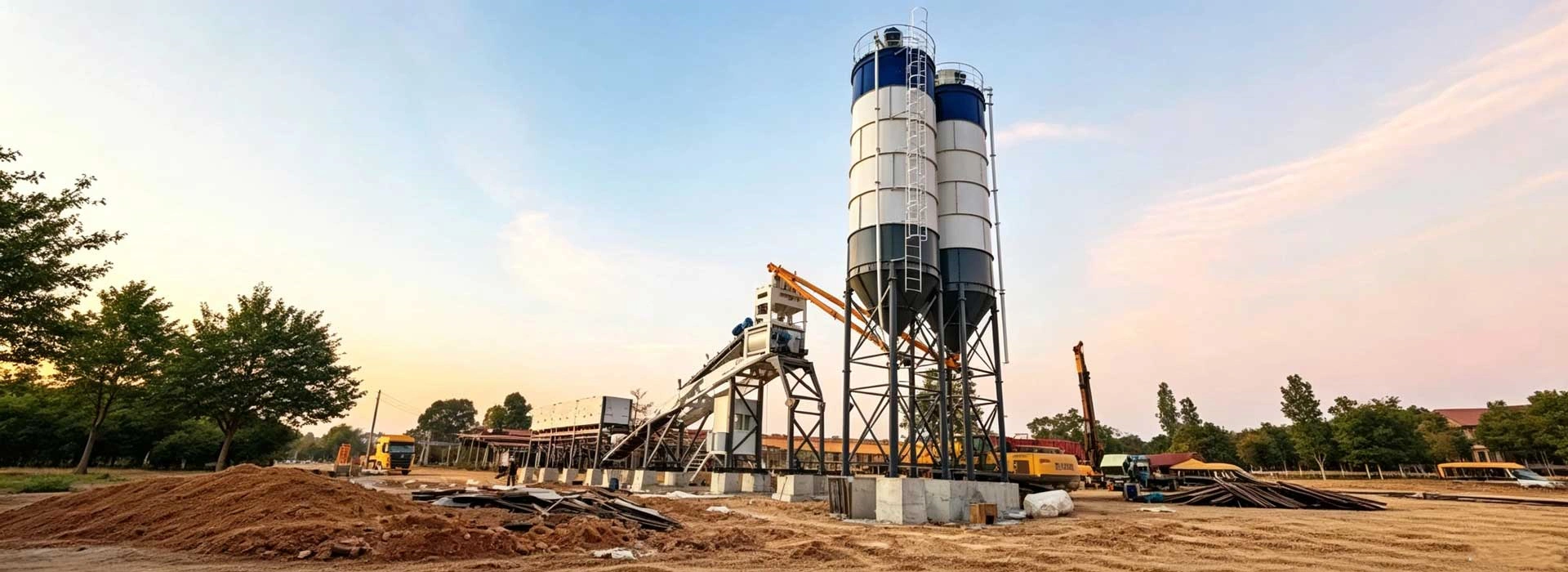
Before installation, finalize the site layout, equipment foundation or support requirements, utility connections, material storage areas, and vehicle routes. Obtain the necessary permits and arrange equipment delivery, installation, commissioning, and operator training.
For a commercial ready-mix business, also assess local demand, competitor pricing, customer locations, raw material costs, and delivery expenses. Develop a financial plan that covers equipment investment, land, labor, energy, maintenance, and working capital.
A successful concrete batching plant layout connects site conditions, equipment configuration, material flow, production capacity, and delivery operations. Plan these elements before purchasing equipment, and verify the layout with the batching plant manufacturer and qualified local engineers. A well-prepared site can support safer operations, more reliable concrete production, and a more practical business launch.