
With the rapid expansion of logistics hubs, container yards, steel yards, precast concrete plants, and shipyards, multiple mobile gantry cranes operating within the same working area has become increasingly common. Rubber Tyred Gantry (RTG) cranes, wheel-mounted gantry cranes, and other mobile gantry crane types often share lanes, stacking zones, or overlapping operating envelopes. While this arrangement significantly improves handling efficiency and space utilization, it also introduces a critical safety challenge: the risk of crane-to-crane collision.
Collision accidents between mobile gantry cranes can lead to severe consequences, including structural damage to cranes, interruption of production, damage to valuable cargo, and most importantly, safety hazards for operators and ground personnel. To address these risks, modern crane systems increasingly rely on collision avoidance mechanisms – a combination of sensors, control logic, communication systems, and intelligent braking or speed control.
This article provides a detailed explanation of collision avoidance mechanisms for multiple mobile gantry cranes, covering system components, working principles, control strategies, typical applications, and their impact on safety and operational efficiency.
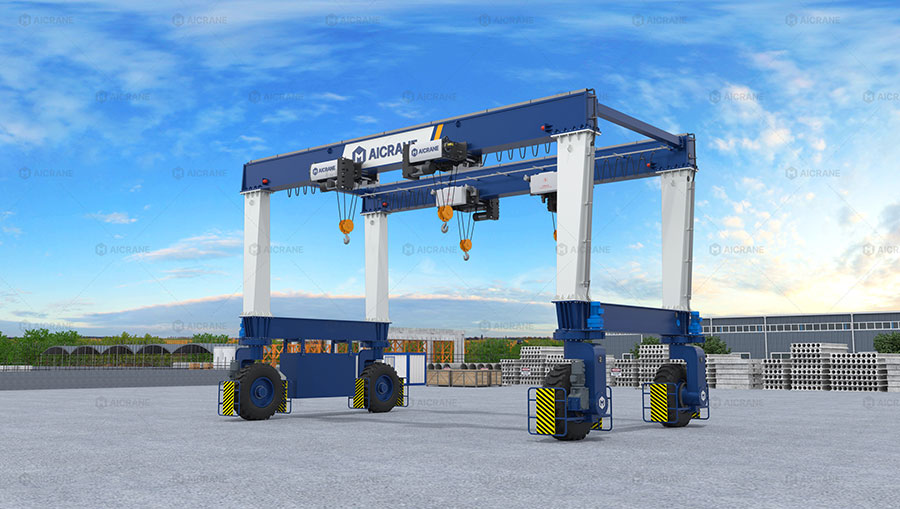
Why Collision Avoidance Is Critical for Mobile Gantry Cranes
Unlike fixed rail-mounted gantry cranes, mobile gantry cranes have greater freedom of movement, which increases operational flexibility but also complexity. Several factors make collision avoidance essential:
-
Shared travel lanes: Multiple cranes often travel along the same yard lanes.
-
Overlapping working zones: Crane spans and outreach areas may overlap during lifting or trolley movement.
-
Limited visibility: Operators may have blind spots due to crane height, container stacks, or environmental conditions.
-
High operating speeds: Modern mobile rubber tyre gantry cranes are designed for fast travel to maximize throughput.
-
Human error: Manual operation always carries the risk of delayed reaction or misjudgment of distance.
A well-designed collision avoidance mechanism acts as an active safety barrier, reducing reliance solely on operator judgment.
Basic Concept of Collision Avoidance Mechanisms
A collision avoidance mechanism is a preventive control system that continuously monitors the relative positions, speeds, and directions of multiple cranes and intervenes when a collision risk is detected.
The system typically performs three core functions:
-
Detection – Identify nearby cranes or obstacles.
-
Evaluation – Calculate distance, relative speed, and potential collision paths.
-
Intervention – Warn operators or automatically limit speed, stop movement, or adjust crane behavior.
Depending on the system design, intervention can range from audible/visual alarms to fully automatic braking or speed reduction.
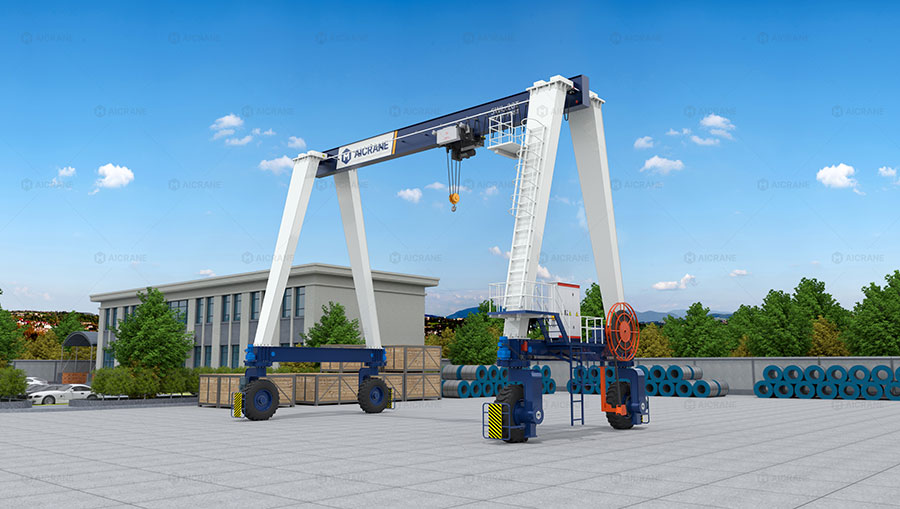
Key Components of a Collision Avoidance System
Position Detection Sensors
Accurate position detection is the foundation of any collision avoidance mechanism. Common technologies include:
-
Laser distance sensors (LiDAR): Measure the distance between cranes with high precision.
-
Ultrasonic sensors: Often used for short-range detection.
-
Radar sensors: Effective in harsh environments such as dust, fog, or rain.
-
GPS or RTK-GPS systems: Used in large outdoor yards to track crane positions globally.
-
Encoder-based travel measurement: Monitors wheel rotation to calculate crane travel distance.
In many systems, multiple sensor types are combined to improve reliability.
Communication System Between Cranes
For multiple mobile gantry cranes, collision avoidance requires real-time communication. Typical communication methods include:
-
Wireless industrial Ethernet
-
Radio communication modules
-
Dedicated crane-to-crane communication networks
Each crane continuously broadcasts its position, speed, and operating status. The system compares this data with predefined safety rules to determine whether a collision risk exists.
Central or Distributed Control Unit
The control unit processes sensor and communication data. Two main architectures are used:
-
Centralized control: One central system monitors all gantry cranes in the yard.
-
Distributed control: Each crane has its own controller, and cranes communicate peer-to-peer.
Distributed systems are often preferred for mobile gantry cranes because they offer higher reliability and scalability.
Warning and Human-Machine Interface (HMI)
Before automatic intervention, operators are usually alerted through:
-
Audible alarms
-
Warning lights
-
On-screen messages in the crane cabin
-
Distance indicators showing proximity to other cranes
This allows operators to take corrective action early.
Automatic Intervention Devices
If the operator does not respond or the distance becomes critically small, the system may activate:
-
Speed limitation
-
Soft stop (controlled deceleration)
-
Emergency stop
These actions are integrated with the crane’s travel drive, braking system, and variable frequency drives (VFDs).
Working Principle of Collision Avoidance for Multiple Cranes
Real-Time Position Monitoring
Each mobile gantry crane continuously measures its position along the travel path. The system establishes a virtual safety envelope around each crane.
Distance and Speed Calculation
The controller calculates:
-
Distance between cranes
-
Relative speed
-
Direction of movement
From these values, it predicts whether the cranes are moving toward each other or away from each other.
Safety Zone Definition
Collision avoidance systems usually define multiple safety zones:
-
Warning zone: Operator is alerted.
-
Slow-down zone: Travel speed is automatically reduced.
-
Stop zone: Crane movement is stopped to prevent collision.
These zones can be adjusted based on crane speed, load weight, and operating conditions.
Intelligent Control Logic
Advanced systems use adaptive logic, where:
-
Heavier loads trigger larger safety distances.
-
Higher travel speeds increase the slow-down zone.
-
Environmental conditions (wind, slope) influence braking distance calculations.
This ensures safety without unnecessarily reducing productivity.
Collision Avoidance in Different Crane Movements
Long Travel Collision Avoidance
This is the most common scenario. Cranes traveling along the same lane are monitored to prevent front-to-back collisions.
Cross Travel and Overlapping Span Protection
In yards where crane spans overlap, the system prevents one crane from entering another crane’s active working envelope.
Lifting and Trolley Interference Protection
In some applications, collision avoidance also considers trolley position and suspended loads, ensuring that hooks, spreaders, or loads do not interfere with adjacent cranes.
Applications in Industrial and Port Environments
Collision avoidance mechanisms are widely used in:
-
Container yards with multiple RTG container cranes
-
Steel yards handling long and heavy materials
-
Precast concrete plants with multiple gantry cranes
-
Shipyards and marine terminals
-
Railway loading yards
In these environments, crane density is high, and collision avoidance systems significantly reduce accident rates.
Benefits of Collision Avoidance Mechanisms
Enhanced Safety
The primary benefit is accident prevention, protecting operators, ground staff, and equipment.
Reduced Equipment Damage
Avoiding collisions prevents structural deformation, wheel damage, and drive system failures.
Improved Operational Efficiency
By allowing cranes to operate safely at higher speeds and closer distances, overall yard productivity increases.
Lower Insurance and Maintenance Costs
Fewer accidents mean reduced repair costs, downtime, and insurance claims.
Integration with Modern Smart Crane Systems
Modern collision avoidance mechanisms are often integrated with:
-
Anti-sway systems
-
Load monitoring systems
-
Yard management software
-
Remote monitoring and diagnostics platforms
This integration supports the development of semi-automated and fully automated mobile gantry crane operations.
Conclusion
As mobile gantry cranes become more powerful, faster, and more numerous within shared workspaces, collision avoidance mechanisms are no longer optional—they are essential. Through a combination of advanced sensors, intelligent control logic, reliable communication, and automatic intervention, these systems provide a robust safety framework for multi-crane operations.
For ports, industrial yards, and heavy-duty handling facilities, investing in an effective collision avoidance mechanism not only enhances safety but also improves efficiency, equipment longevity, and overall operational reliability. As crane technology continues to evolve, collision avoidance systems will play an increasingly important role in the future of smart and safe material handling.